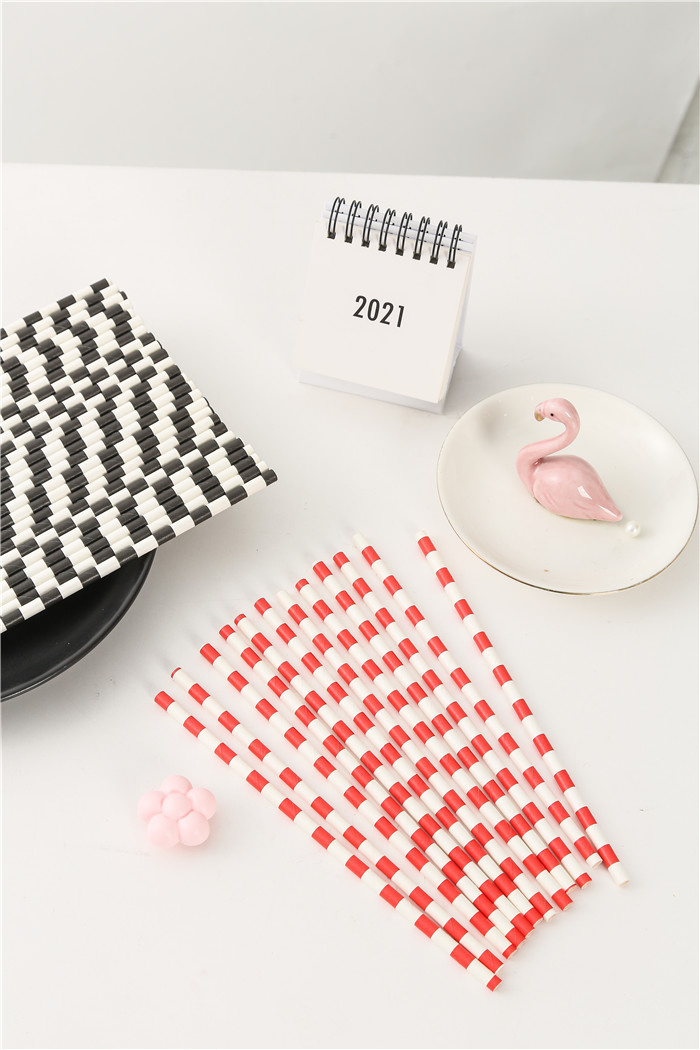
Let us answer the question the way a manufacturer should: a paper straw is food-grade paper bound with non-toxic, food-safe adhesive, and it is not a plastic straw. The manufacturer's own data gives a discarded paper straw about three to four months to degrade in the environment. This site makes no never-softens promise for the product, and the manufacturer's published material states no working-life figure for a straw in a drink: no serving duration, and no minute-by-minute softening timetable. Anyone quoting such a figure for this range is adding data the manufacturer has not published. What follows is drawn from the manufacturer's documentation, so buyers can see where the published data ends.
What the Published Data Actually Covers
The manufacturer's published comparison material documents the following for the paper straw, and this page adds nothing to the list. The material is food-grade wood-pulp paper with non-toxic, food-safe adhesive. The standard drinking format is 6 x 197 mm, with a 5 x 210 mm variant also documented. The documented service temperature range for the paper straw material is -10°C to 90°C, stated as a material parameter. A discarded paper straw degrades naturally in about three to four months. The documented core families carry a minimum order of 30,000 bags and a lead time of 20 to 25 days after deposit. Paper straws can be printed with patterns using food-grade inks. Those are the figures this page takes from the manufacturer's published material — and no in-drink duration figure is among them.
What Is Not Documented — and Why It Matters
No duration figure
No serving duration is documented for this range, and no test result expressed in minutes is published in the manufacturer's material. This guide therefore does not state how many minutes a straw in this range lasts in any drink. Buyers whose service format depends on dwell time should run their own sample test in their own drink, cup and service pattern before ordering — sampling against the real serving is the route this site recommends on the bubble tea page and in the sizes guide as well.
No drink-by-drink ranking
The published material does not rank drink types by their effect on the straw, and it documents no cold-versus-hot degradation speed for drinks. The one drink-related parameter it does document is the service temperature range for the paper straw material, -10°C to 90°C, and this page states that range as a parameter only — it is not converted here into a promise about any particular drink. The paper versus PLA comparison observes the same boundary for both materials.
Formats are documented; durations are not
What the range does document in detail is format. Plain, striped, kraft and custom printed drinking straws, individually wrapped singles, sharp-end bubble tea straws, flexible straws and spoon straws are each documented families, as the paper straw range page sets out. The sizes guide states which sizes the documentation records for each family. The documented record for the range — materials, formats and order figures — is set out in how paper straws are made.
The other material on record
The same published comparison documents a second material, PLA, on its own figures: plant-starch feedstock, a shelf life of roughly six months to one year, and degradation in about 45 days. Those figures are stated in full in the paper versus PLA comparison. No in-drink duration figure is published for PLA either, and this page draws no duration comparison between the two materials.
The Documented Build, Restated
For reference, the documented record for the standard straw is its material — food-grade paper bound with non-toxic, food-safe adhesive — its standard format of 6 x 197 mm, and its documented order figures, as set out in how paper straws are made. The manufacturer's published documentation does not include a process description for the straw, and none is added here. The straw lines behind the range number more than sixty fully automatic lines in the Yiwu plant. Performance in a specific drink remains a matter for the buyer's own sample test, as the previous section explains.
How Buyers Spec Around It
- Start from the documented figures — material, standard format 6 x 197 mm, service temperature range -10°C to 90°C and degradation of about three to four months after disposal
- Use the documented formats — the sizes guide states which sizes the documentation records for each family; the family pages cover bubble tea, flexible and spoon formats
- Sample against your real serving — your cup, your film, your toppings and your service pattern, before the first full order
- Plan with the documented order figures — 30,000 bags and 20 to 25 days after deposit for the documented core families; other families are confirmed per specification in the quotation
- Read the PLA record separately — the PLA straw page documents a different material on its own published figures
The Honest Bottom Line
So: yes, a paper straw is paper, and this manufacturer publishes no promise that it behaves like plastic in a drink. What is published here is drawn from the manufacturer's documentation — food-grade paper, food-safe adhesive, documented formats and sizes, a documented temperature range for the material, a degradation figure of about three to four months after disposal, and documented order figures for the core families. The PLA straw is a different material with its own documented figures, set out side by side in paper straws vs PLA straws, and it is the alternative to consider where regulations allow it. Start from the formats on the paper straw page, and sample against your own menu before committing a programme.