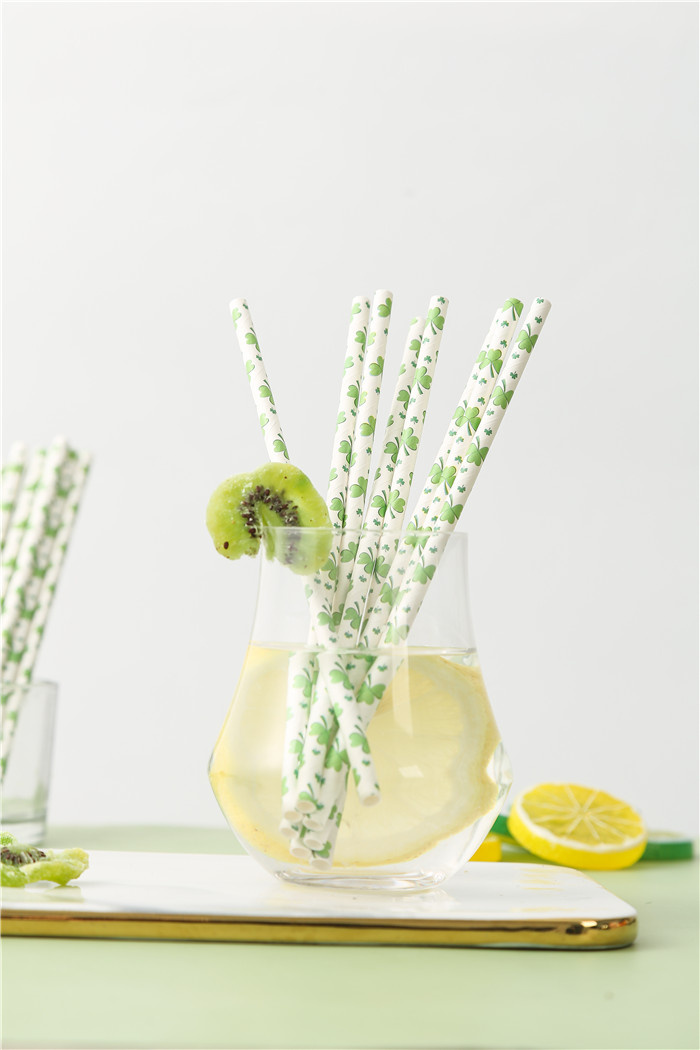
Two straw materials are documented in this manufacturer's range for buyers replacing plastic straws: paper and PLA. Both sit in one plant here — the paper straw range and the PLA straw line — as two separate families. The manufacturer's own published comparison records them as different materials with different figures: different feedstocks, different shelf-life figures and different degradation figures. This page sets those documented figures side by side and adds nothing to them.
The Two Materials, Plainly
A paper straw is made from food-grade paper — in the manufacturer's specification, food-grade wood-pulp paper — bound with a non-toxic, food-safe adhesive, as the manufacturer's product documentation states. A PLA straw is described in the manufacturer's own comparison material as plant-starch based, with an appearance and hand feel close to a traditional plastic straw. Those two descriptions are the feedstock record this comparison works from.
Degradation and End of Life
In the manufacturer's own published comparison, a discarded paper straw degrades naturally in about three to four months, while a PLA straw degrades in about 45 days. Those are the two figures as published. The manufacturer's material does not publish further conditions or an environment-by-environment breakdown for either figure, and none is added here. Neither straw should be littered; where a venue uses a composting collection, local acceptance of each material should be checked with the collection operator.
Shelf Life and Storage
The same comparison gives paper straws a shelf life of roughly one to two years, against roughly six months to one year for PLA. Those documented figures are the shelf-life record published for the two materials. Buyers should plan stock rotation around the documented figure for the material they stock, as the PLA page also notes.
In the Drink
On appearance and hand feel, the manufacturer's comparison describes PLA as close to the traditional plastic straw customers remember. That is the full extent of the published comparison on appearance and feel. For paper, the manufacturer documents a service temperature range of -10°C to 90°C for the paper straw material, and that figure is stated here as the paper parameter itself. No temperature range for PLA is documented in the manufacturer's published comparison, and no drink-duration comparison between the two materials is published there either — the page on whether paper straws get soggy states the same boundary.
Print and Colour
For paper, the manufacturer documents pattern printing with food-grade inks, and the range lists kraft, striped and wrapped presentations. For PLA, the documented catalogue format is coloured straws. Those are the presentation facts the documentation records for the two materials.
Regulation: Check Your Own Market
The manufacturer's published material states no regulatory classification for either material, and this page adds none. How a destination market's single-use rules treat paper and PLA is a question for the buyer's own market check, and it should be settled before sampling: check how your destination market's rules treat each material, then choose. This page records only what the manufacturer's comparison publishes — feedstock, shelf-life figures, degradation figures, the paper temperature range and the documented order figures below.
Documented Order Figures
The two materials are documented in different terms, and the figures are not equivalents. For paper, the documented core families carry a stated minimum order: 30,000 bags, with a 20 to 25 day lead time. For PLA, the catalogue listing carries a price band starting at 200,000 bags — a listing tier, not a minimum order — and the minimum order for a PLA format is confirmed in the quotation. Read each figure as what it is — a documented minimum on one side, a catalogue price band on the other — rather than as two points on one scale.
The Paper Side in the Catalogue
For reference, the paper families documented in the manufacturer's catalogue include the Logo Customize 100% Biodegradable Paper Straws with Paper Wrap, the High Quality Degradable Cocktail Paper Straws, the Kraft Paper Sharp Straw Milkshake Straws, the Hot Sale Disposable Striped Design Paper Drinking Straw and the sharp-end bubble tea listings, alongside the PLA listing itself, the Biodegradable and Eco-Friendly PLA Colored Plastic Straw. The two materials are listed as separate families with separate figures, and this comparison keeps them separate: the documented core paper families at a 30,000-bag minimum order, and the PLA listing at its catalogue price band from 200,000 bags. The full paper format map is on the paper straw range page and the documented PLA format on the PLA straw page.
The Short Version
| Factor | Paper straw | PLA straw |
|---|---|---|
| Feedstock | Food-grade wood-pulp paper | Plant-starch PLA |
| Degradation (manufacturer data) | 3-4 months | About 45 days |
| Shelf life | About 1-2 years | About 6 months - 1 year |
| Temperature range | -10°C to 90°C documented | Not documented in the manufacturer comparison |
| Appearance and hand feel (manufacturer comparison) | Paper construction | Close to the traditional plastic straw |
| Regulatory position | Not stated in the manufacturer comparison | Not stated in the manufacturer comparison |
| Documented scale | Order start 30,000 bags (core families) | Price band from 200,000 bags (not a minimum order) |
Use the documented figures above as the comparison record: feedstock, shelf life, degradation, the paper temperature range and the order figures, each stated as the manufacturer publishes it. Plan rotation around the documented shelf-life figure for the material you stock, check your own market's rules for each material, and if the decision is still open, sample both in your own drinks before committing a programme.